

Vision
Prosperity through Irrigation
Mission
To develop and manage irrigation and drainage infrastructure for diversified, economically sound and sustainable irrigation and drainage systems under organized smallholder and estate management institutions and to maintain an effective advisory service.
Overall Goal
To achieve sustainable irrigation development and management that contributes to increased agricultural production and productivity.
Objectives
Sustainable Irrigation Development
To foster sustainable irrigation development, the department has embarked on development of new irrigation schemes with the aim of increasing area under sustainable irrigation. This entails development of new irrigation infrastructure to put more land under irrigation. It is estimated that the country has over 600,000 hectares of irrigation potential but only about 103,000 hectares has been developed.
Sustainable Irrigation Management
The Department is rehabilitating existing irrigation schemes in order to sustain desired crop production levels. This is based on the need for proper management of developed areas for sustained productivity. However, beneficiaries are required to operate and maintain the infrastructure so that the designed capacities are maintained to support desired crop production levels.
Capacity Development
In order to address the challenge of technical competence amongst irrigation stakeholders for sustainable irrigation development and management, the Department is implementing a project aimed at building the capacity of its staff and other stakeholders. Development and management of irrigation requires adequate technical and administrative capacity. Technical competence within the public and private sectors, including training institutions and beneficiary communities, is critical for sustainable irrigation development and management.
Irrigation Technologies
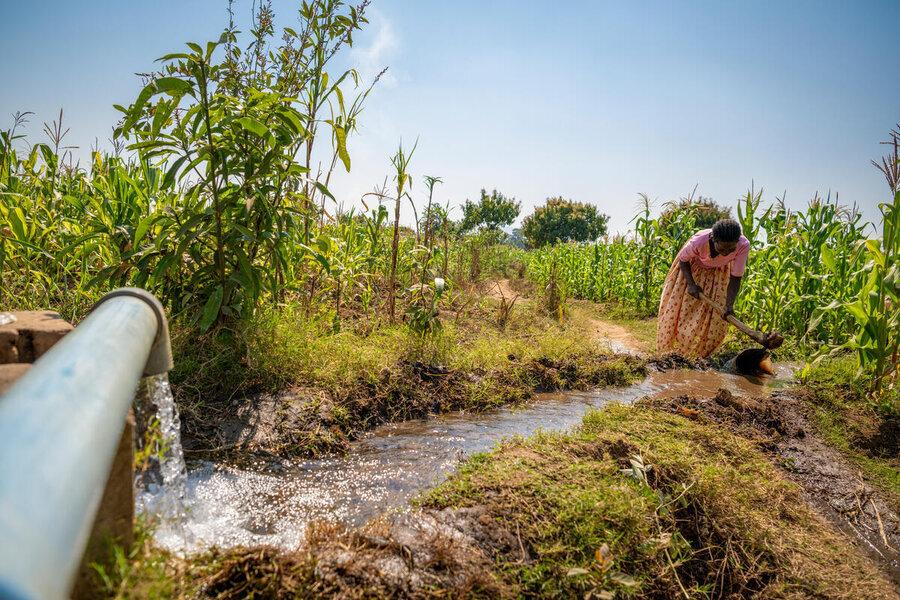
There are four irrigation technologies which are utilised by smallholder farmers namely: Gravity-fed, Treadle Pumps, Motorised Pumps and Watering cans. The gravity-fed technology accounts for 56% of the total developed area under smallholder farmers. This technology is the most commonly used because of cost-effectiveness as it does not need fuel as is the case with motorized pump-based technology. In addition, the technology does not need much manpower like the watering can and treadle pump-based technologies.